Car Wash Vs Auto Detailing – How Are They Different?
Car wash vs auto detailing – What’s the difference between them
Car wash and auto detailing are two processes that have some similarities and some differences. They both serve the same purpose, i.e. clean the car and keep it new and shiny. However, they differ in their approach, frequency, timing, and the amount of work performed. Let us take a look at both these processes to understand their differences and similarities.
What Does The Process of Car Wash Entail?
Car wash is a relatively simple process whose aim is to get rid of dirt, grime, salt, bird poop, and any other environmental impurity from the clear coat of the car. A simple car wash takes 10-15 minutes and can be performed at home or at a professional car washing station. A standard car wash comprises of the following steps:
- Rinsing the car’s exterior surface with clear water to get rid of impurities
- Application of soap and scrubbing the surface to remove physically bonded impurities
- Rinsing the car with water using a high-pressure hose to remove the soap
- Wiping the car’s surface with a microfiber towel to dry it
Car washing is limited to the car’s exterior surface. Car washing can be performed in the following ways:
- Using a high-pressure hose. It is a fast way to wash your car but gives mediocre results.
- Professional hand-wash. This type of car wash is performed manually. It is a more in-depth process as even the minor nooks and crannies are also cleaned in this process.
- Touchless car washing. It is an automated car washing process that uses brushes and stiff cloths. Soap and water are sprayed through high-pressure nozzles.
To keep it clean and to maintain its looks, the car should be washed after every few weeks.
Basics of Auto Detailing Process
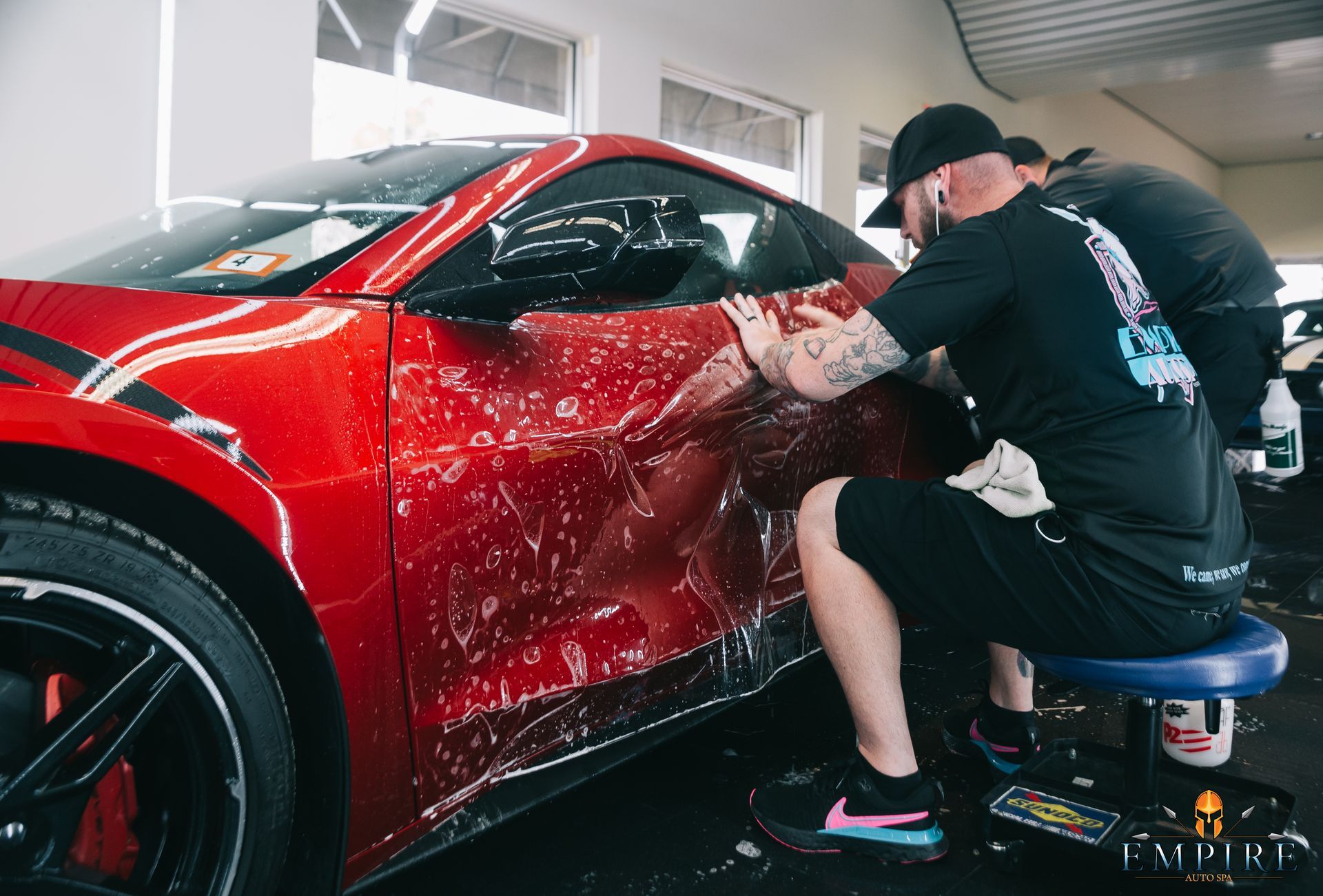
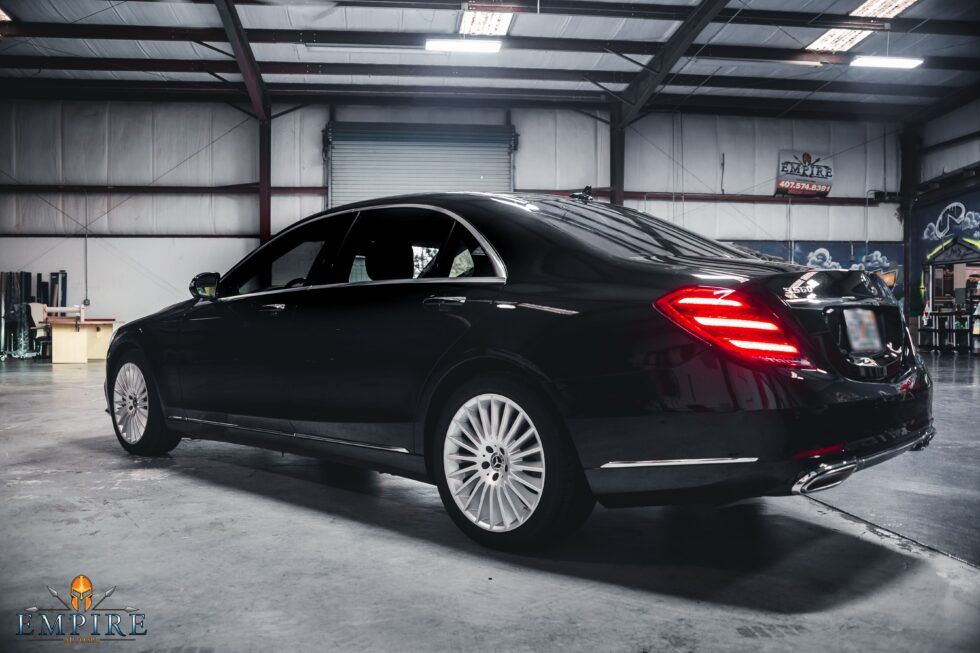
- Auto detailing is the process of cleaning your car thoroughly. It is a much more detailed and in-depth process that involves cleaning the car’s interior and exterior surfaces. Auto detailing uses special types of equipment and chemicals to remove all the dirt and grime and to repair minor damages done to the car’s surface. Auto detailing gives the best results when performed by detailing experts and professionals.
Because it is a much more detailed process, professional auto detailing can take a whole day. If a car is well-maintained, then it can be auto-detailed with a gap of 6-12 months.
Major Steps of Auto Detailing
Professional auto detailing comprises of the following steps:
- Washing and cleaning the wheels and tires
- Applying a pre-cleaner that dissolves the chemically and physically bonded dirt, grime, and other impurities from the car’s surface.
- Spraying the car with a snow foam
- Cleaning the car with a specially formulated detergent and using water to wash it down
- Drying the vehicles using microfiber towels.
- Applying car polish to fill in the scratches and swirl marks and to even out the car’s clear coat.
- Applying car glaze. The glaze adds shine and enhances the paintwork while also removing minute swirl marks.
- Applying a layer of car wax or sealant. It protects the car’s paintwork against environmental damage and seals in the shine of the car.
Interior auto detailing is performed as follows:
- Manual removal of trash and vacuuming the mats, seat covers, and nook and crannies.
- Cleaning and conditioning the hard surfaces such as glove compartments, dashboard, seatbelts, and sideboards.
- Cleaning the upholstery with soap and conditioner.
- Steam cleaning the carpets.
Car Wash Vs Auto Detailing – A Final Word
Both processes work together to keep the car clean and in a good shape. To get professional auto detailing services at reasonable rates, contact Empire Auto Spa. Call us at (407) 574-8381 to get a free estimate of our services. We are located in Orlando, Florida.